8C-TDILA1
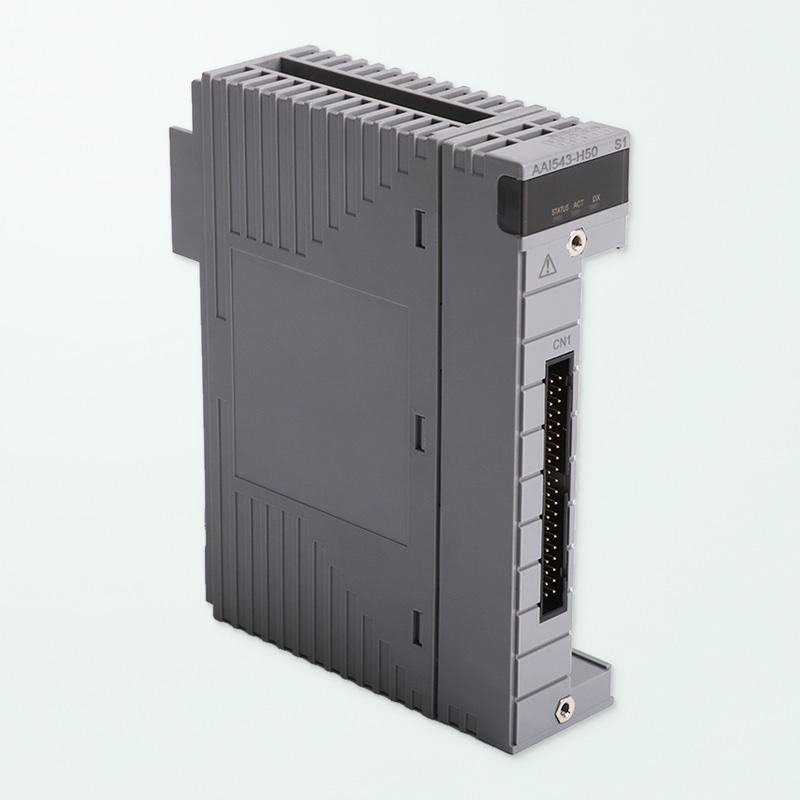
Series 8 nonredundant digital input IOTA

No online payment is requested. Final price and terms are supplied in a written quotation.
ISO 9001:2015 certified industrial automation spare parts supplier


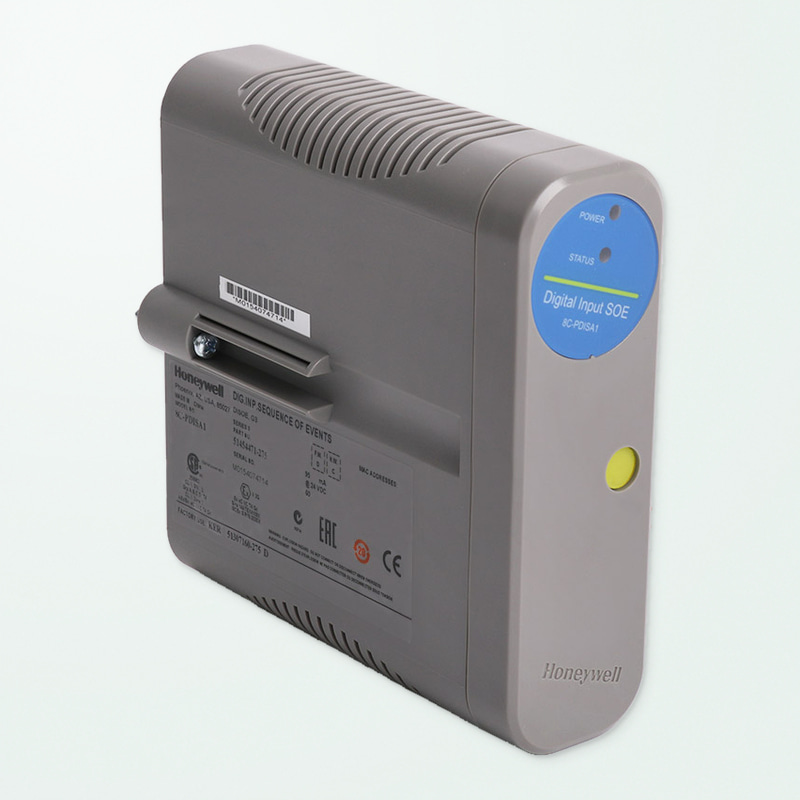
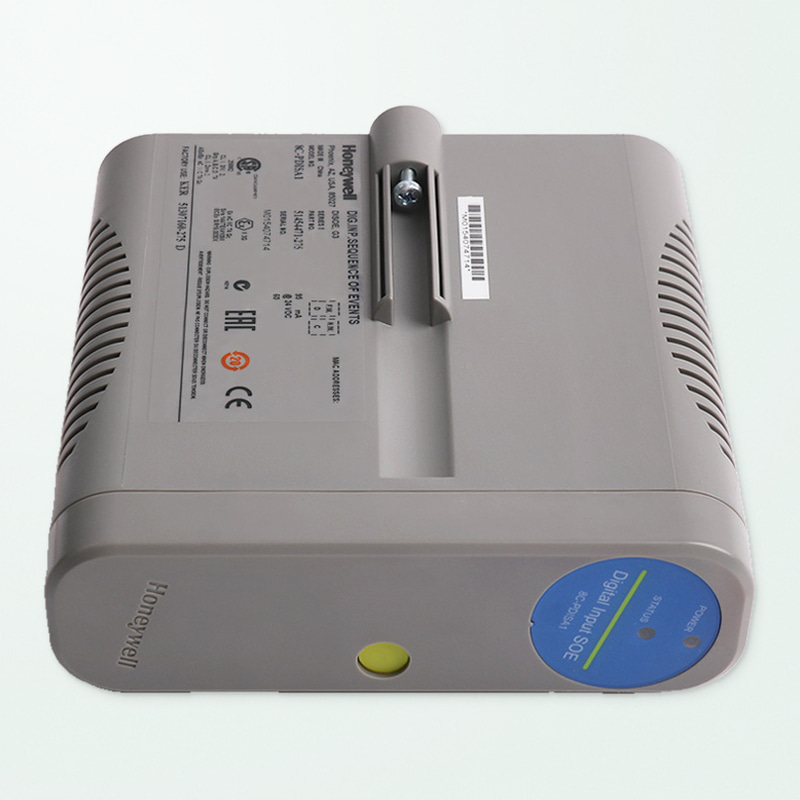
Honeywell 8C-PDISA1 51454471-275 is a coated Series 8 sequence-of-events input module for 32 discrete 24 VDC signals. It supports 1 ms event resolution, normal or low-latency PV scanning and optional redundancy.
Version check: Confirm the 8C-PDISA1 SOE model, the required normal/SOE/low-latency mode and installed 8C-TDILA1 or 8C-TDILB1 IOTA; 1 ms event resolution is not the PV scan rate.
Lifecycle status: Unknown
Product image is representative; revision or series may vary.
Contact us to request a specific version.
12-month return-to-base cover.
Eligibility per quote.
DHL, FedEx or UPS.
Or use an agreed carrier account.
Bank transfer before dispatch,
unless agreed in writing.
Honeywell 8C-PDISA1 51454471-275 is the coated Series 8 sequence-of-events input module for applications that need to establish the order of equipment state changes. It accepts 32 nominal 24 VDC discrete inputs and can time-tag transitions with 1 ms SOE resolution, supporting review of closely spaced process events. Normal, sequence-of-events and low-latency operating modes allow its input processing to suit the configured application. Internal diagnostics, direct or reverse indication and optional redundancy support its role as a supervised event-input interface within an Experion control system.
Hardware specifications. The 8C-PDISA1 has an 18–30 VDC DI power range and a 95 mA module current rating. It uses optical isolation in the IOM and conformally coated electronics. Input impedance is 4.2 kΩ. The specified ON threshold is at least 13 VDC or 3 mA, while OFF is at most 5 VDC or 1.2 mA. The absolute delay across the input filter and isolation is 5 ms ±20%.
| Parameter | Specification |
|---|---|
Product Identity |
|
| Product family | Series 8 I/O |
Functional Configuration |
|
| I/O function | Digital input with sequence-of-events support |
| Input channels | 32 |
| Normal / SOE PV scan | 20 ms |
| Low-latency PV scan | 5 ms |
| ON sense threshold | 13 VDC minimum or 3 mA minimum |
| OFF sense threshold | 5 VDC maximum or 1.2 mA maximum |
| Galvanic isolation | 1000 VAC RMS or ±1000 VDC; optical isolation in the IOM |
| Nonredundant IOTA | 8C-TDILA1, coated, 9 in |
| Redundant IOTA | 8C-TDILB1, coated, 12 in |
Performance & Power |
|
| Voltage rating | 24 VDC |
| DI power range | 18–30 VDC |
| Module current rating | 95 mA |
| SOE resolution | 1 ms |
| Input impedance | 4.2 kΩ |
| Input filter and isolation delay | 5 ms ±20% |
Environment |
|
| Protection of electronics | Conformal coating |
System compatibility. The 8C-PDISA1 is documented for Honeywell’s Series 8 I/O and C300 controller platform. Normal mode uses a 20 ms PV scan; SOE mode combines 1 ms event resolution with a 20 ms PV scan; low-latency mode uses a 5 ms PV scan. It also supports optional redundancy, direct or reverse indication and internal or external field power. Confirm the configured operating mode because event resolution and PV scan time describe different functions.
Use the model-specific Series 8 IOTA and the installed system wiring documentation. The reference PDF provides the applicable connection limits, termination-assembly choices and configuration notes.
| Check | Requirement | Application |
|---|---|---|
| Field input | 24 VDC discrete | 18–30 VDC DI power |
| ON / OFF | ≥13 VDC / ≤5 VDC | Or ≥3 mA / ≤1.2 mA |
| IOTA | 8C-TDILA1 / 8C-TDILB1 | Nonredundant / redundant |
The module plugs onto its IOTA, where the field terminals and power distribution are located. Confirm the installed termination assembly before moving wiring.
Use the documented 8C-TDILA1 nonredundant IOTA or 8C-TDILB1 redundant IOTA. Confirm the installed field-power arrangement before connecting the replacement.
Keep DI power within 18–30 VDC and verify the field device can meet the stated ON and OFF thresholds. The input impedance is 4.2 kΩ.
Select the mode required by the application: normal with a 20 ms PV scan, SOE with 1 ms event resolution and a 20 ms PV scan, or low latency with a 5 ms PV scan.
Timing distinction. Do not substitute SOE resolution for the input filter delay or PV scan period; Honeywell specifies these separately.
Field circuit limits. For guaranteed ON, the specified maximum field resistance is 300 Ω at 15 VDC; for guaranteed OFF, the specified minimum is 30 kΩ at 30 VDC.
Choose the SOE model when the application requires time-tagged discrete events. Honeywell specifies 1 ms SOE resolution for 8C-PDISA1, while its function matrix lists 8C-PDILA1 separately as standard DI.
No. The SOE mode provides 1 ms event resolution with a 20 ms PV scan. The separately listed low-latency mode has a 5 ms PV scan.
Honeywell lists normal mode with a 20 ms PV scan, SOE mode with 1 ms event resolution and a 20 ms PV scan, and low-latency mode with a 5 ms PV scan.
The specified IOTAs are 8C-TDILA1 for nonredundant operation and 8C-TDILB1 for redundant operation. The appropriate IOTA must match the actual system configuration.
The nominal signal is 24 VDC, with an 18–30 VDC DI power range. ON requires at least 13 VDC or 3 mA; OFF is specified at no more than 5 VDC or 1.2 mA.
Honeywell lists the SOE and pulse accumulation functions under different module models. 8C-PDISA1 provides SOE; 8C-PDIPA1 is the separately specified pulse accumulation model. Similar channel counts or common IOTA options do not establish equivalent functionality.
Honeywell specifies a 5 ms ±20% absolute delay across the input filter and isolation. This is distinct from the stated 1 ms SOE resolution and the selected PV scan period.
Yes. Select direct or reverse input indication to match the contact logic used by the application.
Product identification and application notes, followed by selected Honeywell original pages covering Series 8 hardware, the matching IOTA and model-specific electrical limits.
PDF · 7 pages · 117.3 KB · Compiled by EWOLO CONTROL. Honeywell S803-150-530, May 2024, Version 1.0.
Preview Product Reference (PDF)Series 8 nonredundant digital input IOTA
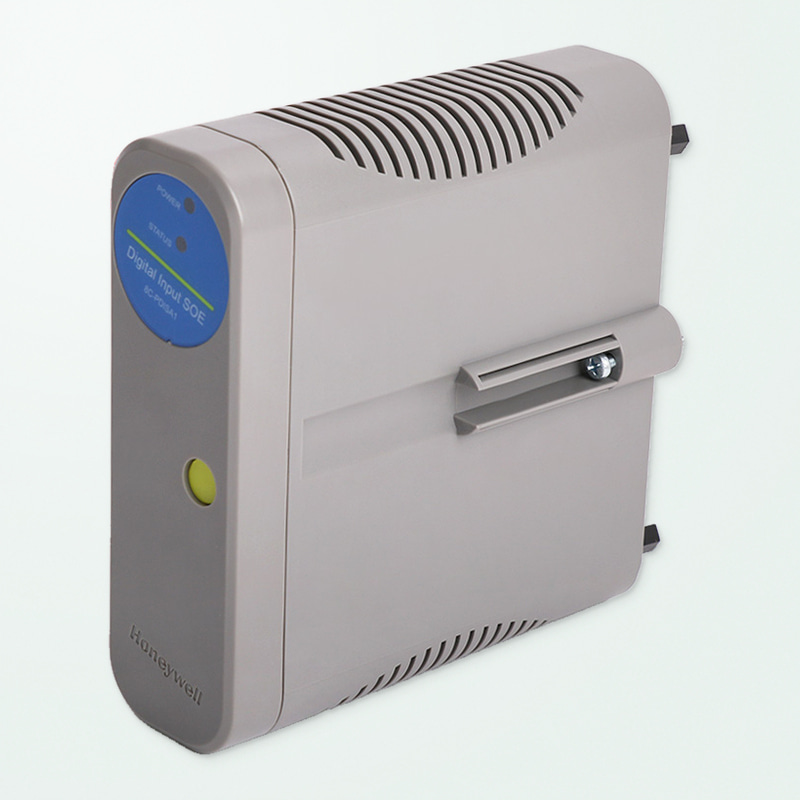
Series 8 redundant digital input IOTA
Series 8 32-channel 24 VDC digital input module
Series 8 digital input and pulse accumulation module
Series 8 16-channel differential HART analog input module
Series 8 16-channel single-ended HART analog input module
Series 8 16-channel single-ended analog input module
Series 8 16-channel RTD and thermocouple input module
Series 8 16-channel HART analog output module
Series 8 16-channel analog output module without HART
Series 8 32-channel 24 VDC digital output module
Series 8 nonredundant analog output IOTA
Series 8 redundant analog output IOTA
Series 8 nonredundant digital output IOTA
Series 8 redundant digital output IOTA
EWOLO CONTROL is an independent supplier of industrial automation spare parts. See About Us for our company background and Company Qualifications for the published ISO 9001:2015 certificate and supplier assessment records.
We source DCS, PLC and TSI spares for maintenance and replacement.
Pay by bank transfer before dispatch, unless agreed otherwise in writing.
Model, quantity and visible condition are checked against your order.
Packaging is selected for the product and agreed shipping method.
DHL, FedEx, UPS or an agreed carrier. Tracking follows collection.
Commercial invoice and packing list supplied. Agree extra documents before ordering.
Eligible items: 12-month return-to-base warranty from dispatch, per quotation.
Send fault details and photos. Returns need prior written approval.
REQUEST A QUOTE
Include the part number, required quantity and destination in your enquiry. Add the required hardware series or firmware revision, if applicable.
Request a Quote →Confirm the offered unit's condition, quantity, included accessories and dispatch time in the quotation.
No online payment is requested. Final price and terms are supplied in a written quotation.
Yokogawa AAI543-H50 is a 16-channel isolated 4–20 mA output module for CENTUM FIO. It supports HART communication and standard-response switching in a dual-redundant configuration. Version check: Match the -H50 standard switchover response, hardware Style and terminal option; a redundant pair must use the same response class.
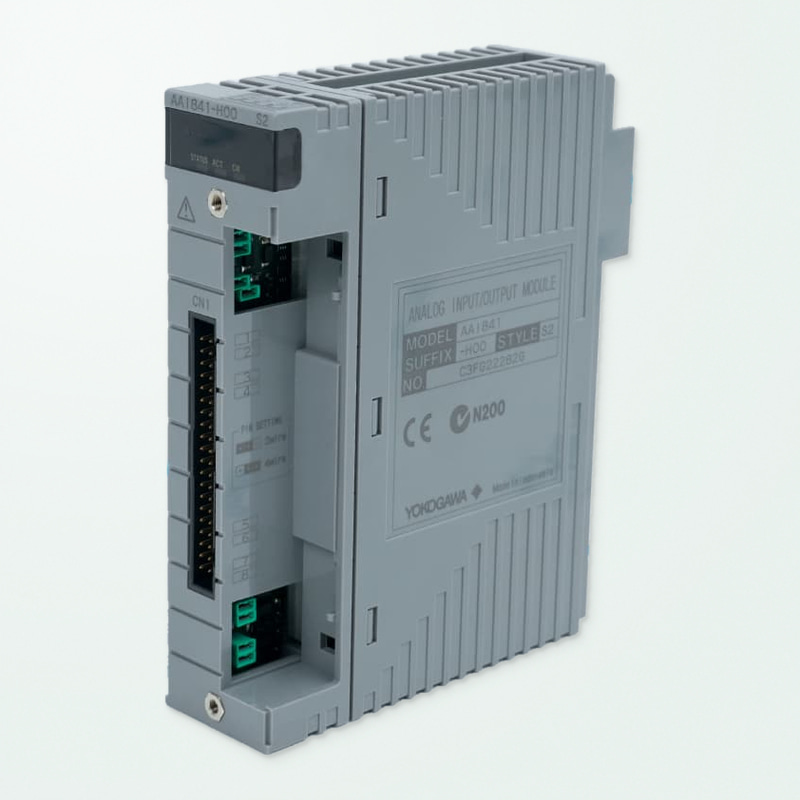
Yokogawa AAI841-H00 is a non-isolated FIO module with eight 4–20 mA inputs and eight 4–20 mA outputs. It supports up to eight loops, HART communication and dual-redundant configurations. Version check: Confirm the legacy -H00 code, hardware Style, node and terminal option; HART in an ER-bus remote node requires EB401 Rev. 2 or later.
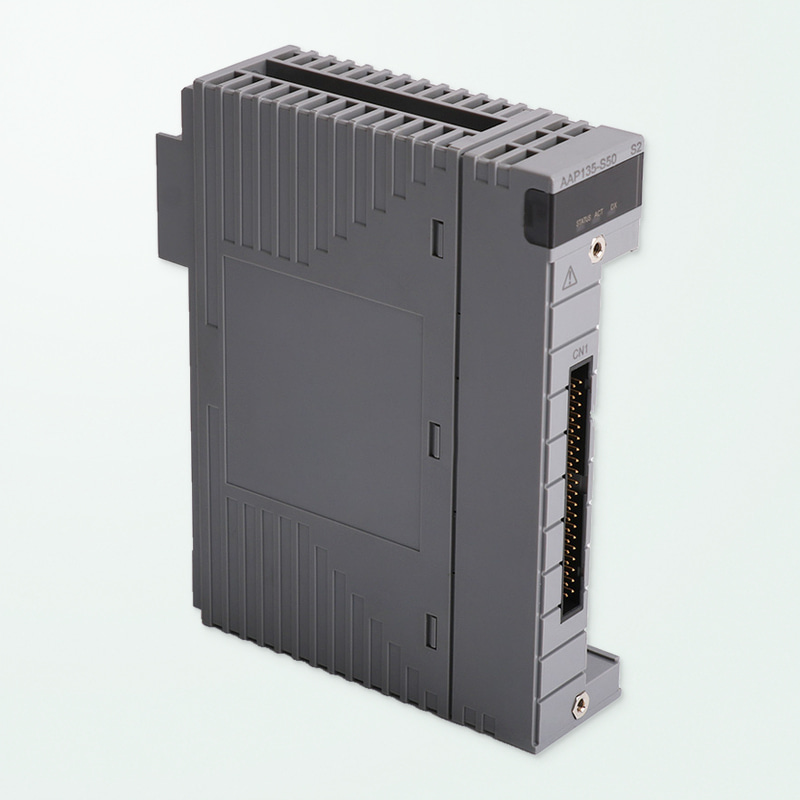
Yokogawa AAP135-S50 is an eight-channel isolated pulse input module for CENTUM FIO. It accepts contact, voltage-pulse and current-pulse signals, with frequency limits determined by the selected signal and redundancy configuration. Version check: Match pulse source, frequency, transmitter supply and redundancy mode; dry-contact limits are lower than the 10 kHz electronic-pulse limit.
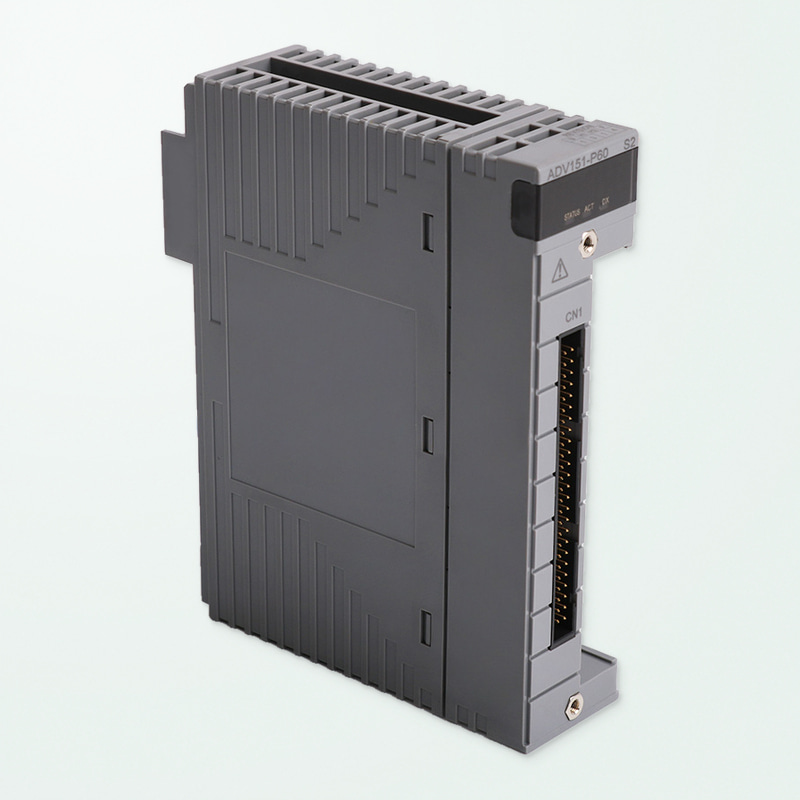
Yokogawa ADV151-P60 is a 32-channel 24 V DC digital input module for CENTUM FIO. The P version supports pushbutton input, and suffix 6 provides input-status display without explosion protection. Version check: Confirm -P60 pushbutton capability, status display, hardware Style and input polarity; do not substitute an output or SOE-capture version.
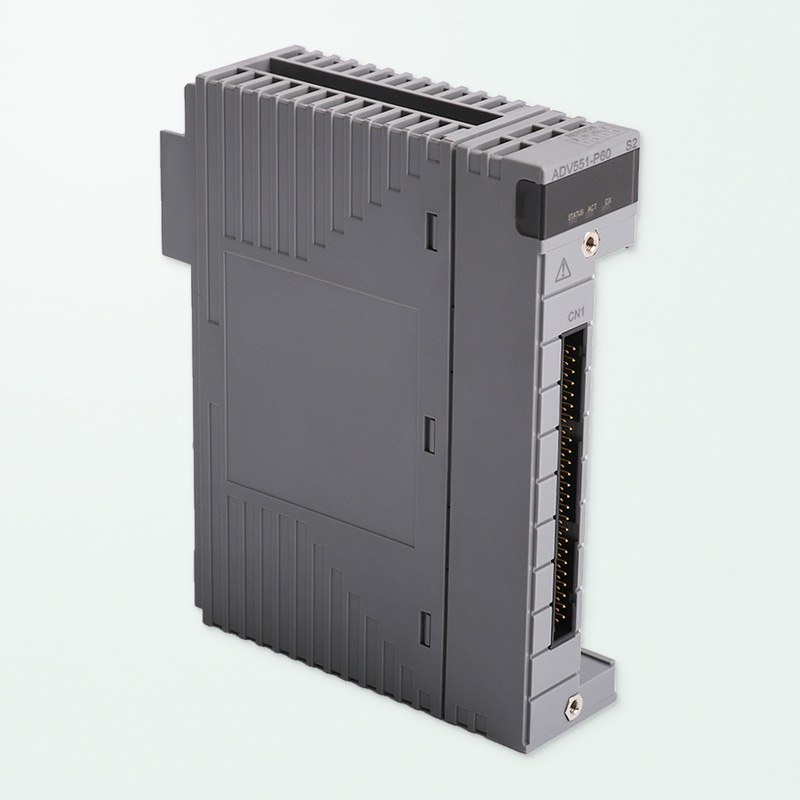
Yokogawa ADV551-P60 is a 32-channel current-sink transistor output module for CENTUM FIO. It supports status, pulse-width and time-proportioning output patterns with output-status display. Version check: Match -P60, sink-output load and configured point-mode pattern; check paired-channel and redundancy restrictions before replacement.
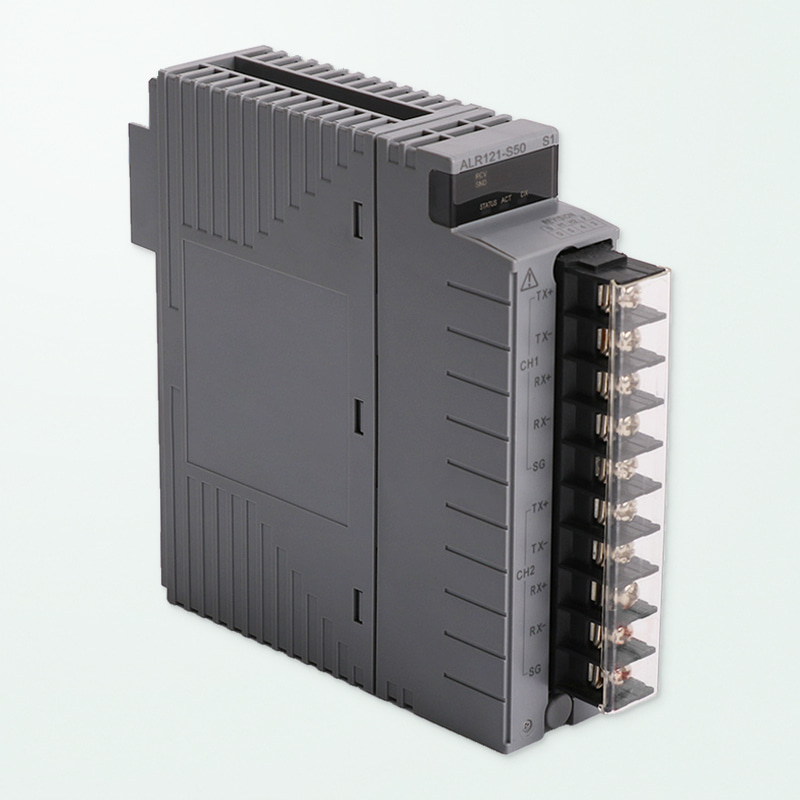
Yokogawa ALR121-S50 is a two-port RS-422/RS-485 serial communication module for CENTUM N-IO/FIO systems. It exchanges subsystem data with the FCS using supported functions such as Modbus RTU and FA-M3 communication. Version check: Confirm RS-422/RS-485, the common protocol selected for both ports, baud rate, data mapping and the installed redundancy arrangement.
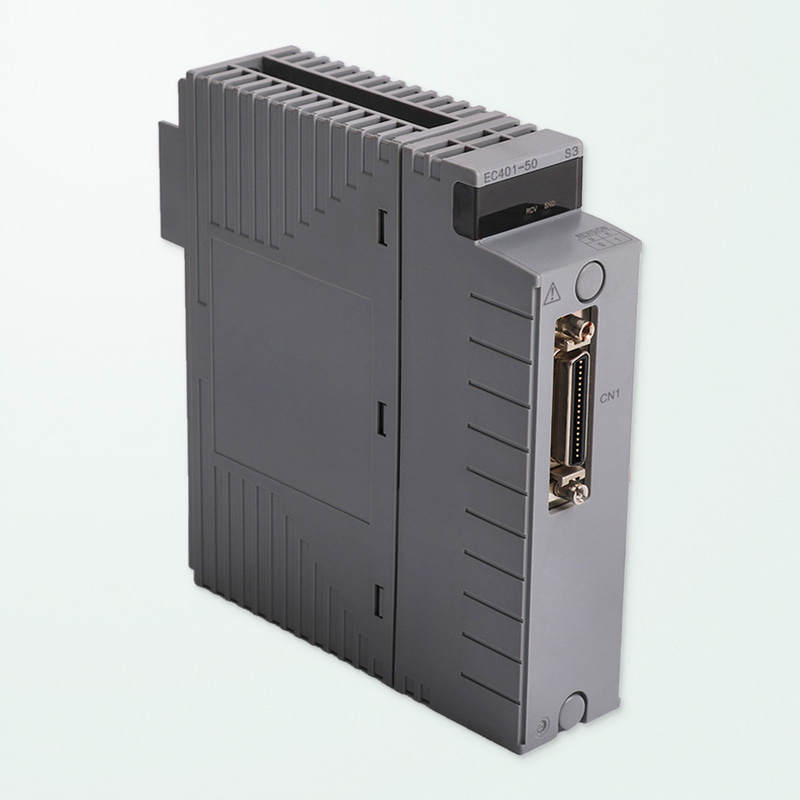
Yokogawa EC401-50 is a one-port ESB bus coupler for CENTUM N-IO/FIO. It links the field control unit to supported ESB nodes at 128 Mbps and supports single or dual-redundant module arrangements. Version check: For a CP471 system, require EC401 Style S3 or later; also match the one-port ESB topology, node types and redundancy arrangement.
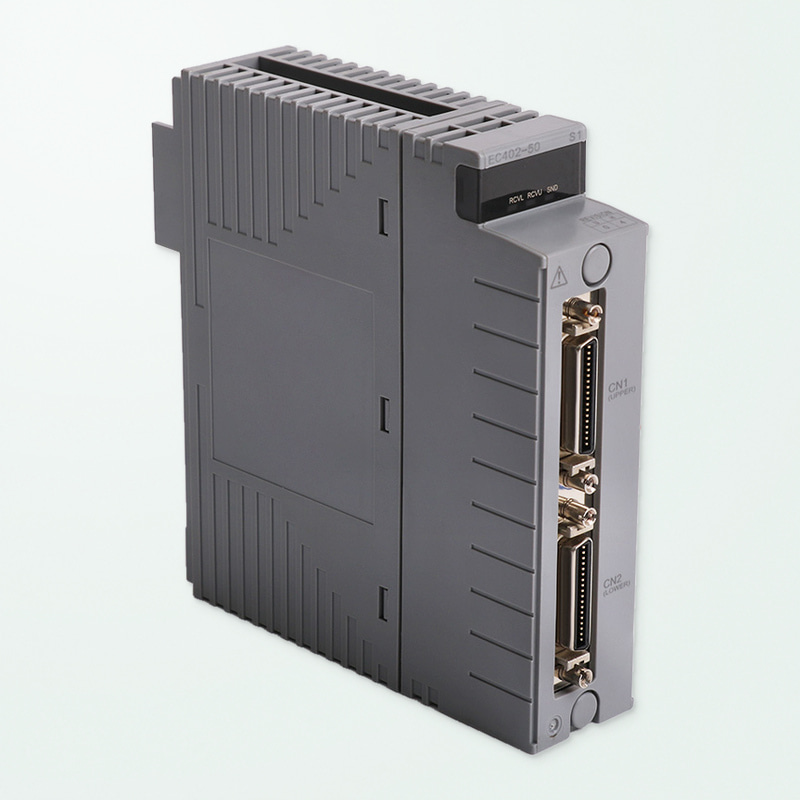
Yokogawa EC402-50 is a two-port ESB bus coupler for CENTUM N-IO/FIO. Its upper and lower ESB connections link supported field control units to I/O nodes at 128 Mbps. Version check: Match the two-port ESB topology and system release; the 12-nodes-per-port exception applies only to the specified A2FV50 star configuration.
No online payment is requested. Final price and terms are supplied in a written quotation.
Scan to Wechat :

Scan to WhatsApp :