
Is the entire 3500 platform obsolete?
Do not decide from the platform name alone. Check the exact module, suffix and revision against a manufacturer lifecycle notice, then compare a suitable spare with the full scope of a retrofit.
Prepare your parts list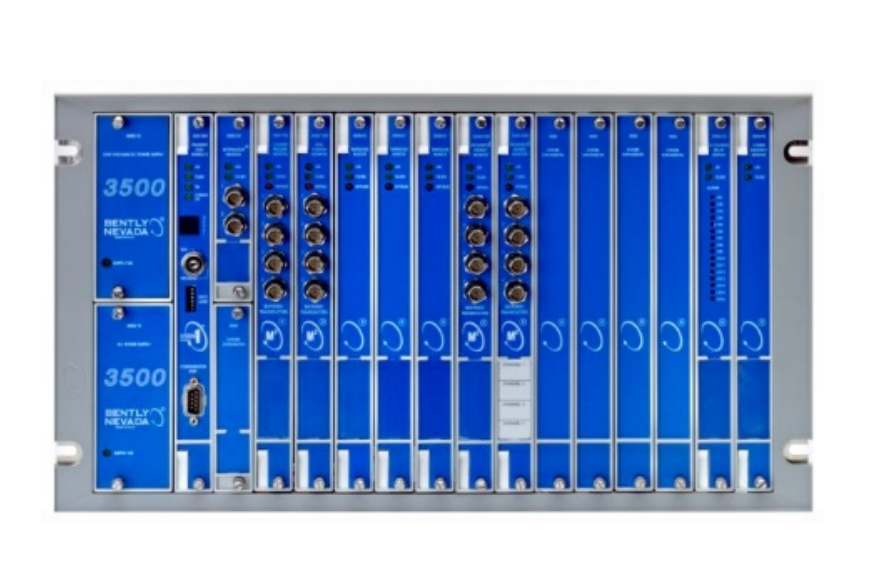
- 1
Identify the exact item
Complete number, suffix, revision and rear I/O.
- 2
Check the evidence
Match the manufacturer's notice to that item.
- 3
Compare the full scope
A suitable spare or an engineering review.
The short answer needs a part number
No, the existence of Orbit 60 is not evidence that the entire Bently Nevada 3500 platform is obsolete. Baker Hughes continues to present 3500 as a machinery protection system on its official product website. That establishes a current public product presence; it does not establish the orderability or support status of every module, suffix and hardware revision installed over the platform's life.
For a buyer holding a failed module, the distinction is important. “3500 is supported” can be too broad to solve the purchase. “3500 is obsolete” can be equally misleading if it turns a manageable spare-parts requirement into an unnecessary rack-replacement project. The useful question is whether the exact installed component has an acceptable supply route, an approved replacement, or a documented reason to change the wider system.
A supplier quotation, a product page and a manufacturer lifecycle notice answer different questions. A quotation addresses a particular offer. A product page describes a platform. A lifecycle notice identifies a defined product population and transition. None should be stretched to cover a different scope.
Why two buyers can receive different answers
A rack is an assembly, not one interchangeable product. The front monitor, its rear input/output module, power arrangement, communications and connected transducers all contribute to the installed function. Two racks bearing the same 3500 name may therefore have different procurement constraints.
One buyer may need a familiar module already used elsewhere on the site. Another may have a special input/output variant, an older revision or a modification that ordinary stock does not cover. A distributor offering one variant cannot settle the availability of another. Similarly, absence from one distributor's inventory does not establish manufacturer obsolescence.
Descriptions often lose the information that matters most. A purchase request may say “3500 vibration card” while the installed combination also determines signal connections and external interfaces. A replacement decision based on the shortened name can move the problem from purchasing to commissioning, when the mismatch becomes more expensive to resolve.
Read lifecycle language against its actual scope
Bently Nevada's published commitment to 3500 explicitly discussed continued support alongside Orbit 60. It also explained that a newer platform alone did not create a compelling immediate replacement case for an existing installation. That historical statement is useful context, but it is not a perpetual commitment for every part number in 2026 and beyond.
The table below separates common statements that are frequently treated as interchangeable. The distinction matters most when management is approving a large replacement budget on the strength of a brief email.
| Statement | What it establishes | What remains unresolved |
|---|---|---|
| The platform is on the official website | The manufacturer publicly presents the platform | Exact component lifecycle and orderability |
| A seller has stock | A specific item may be available | Suitability, condition and supporting documents |
| A newer platform exists | Another architecture can be considered | Whether the installed system needs replacement |
| A dated notice names the component | A defined lifecycle change applies to that scope | The approved replacement and the site's transition plan |
Start with the job the replacement must do
A spare may fit the requirement
The required function is unchanged, the installed configuration is understood, and the replacement can meet the site's acceptance process.
A wider review may be needed
Repeated problems, scarce variants, incomplete records or a plant expansion can change the decision and the engineering scope.
When a spare remains a reasonable purchase
A spare purchase is easier to justify when the required function is unchanged, the installed configuration is understood and the replacement can be accepted under the site's maintenance process. It can preserve a known installation through a planned operating period without expanding the scope of an outage.
The commercial comparison should include the consequences of using the part. A low purchase price loses its advantage if the item cannot be accepted, needs unexpected rework or differs from the approved configuration. Conversely, the highest-priced offer is not automatically the strongest one. Product identity, condition, traceability and the agreed acceptance basis make offers meaningfully comparable.
Buying ahead also requires judgment. A spare only reduces exposure if it is suitable for the equipment that will remain in service and is stored and maintained appropriately. Accumulating several variants without knowing their applications can create apparent security while leaving the actual vulnerable position uncovered.
Manufacturer case
A 3500 installation helped identify a real machine fault
25 March 2015 · Historical operating example
What the report describes
A March 2015 official report describes a motor-driven compressor monitored by a 3500 rack and System 1 under a supporting services agreement. During normal loading, the motor's radial vibration changed abruptly, with a corresponding phase change. The machine was taken offline for investigation.
The report identifies a detached internal fan blade and attributes the diagnostic decision to the available condition data. It reports that the investigation protected the machine from further damage.
What it means for a buyer
For a buyer, this demonstrates why the installed system's job matters alongside its age. A rack can contribute useful information through an appropriate measurement chain, software configuration and diagnostic process. A replacement decision should therefore identify which of those functions is unavailable, unreliable or no longer supportable.
This historical operating result does not establish today's availability of a particular 3500 module. Keep the functional assessment separate from the commercial lifecycle check: obtain the full ordering code and revision, assess the specific replacement, and use current product information rather than treating either an old success story or a broad obsolescence claim as an ordering decision.
When the wider rack deserves attention
A single failed module does not establish that the platform has reached the end of its useful life. However, repeated component problems, scarce variants, poor configuration records or an approaching plant expansion can change the calculation. In those circumstances, buying the next spare may postpone a decision that already needs engineering work.
The retrofit comparison should include what the machine actually uses: protection functions, external contacts, control-system signals, data collection and available cabinet space. Keeping the same sensor count does not guarantee the same project scope. A changed interface or additional output requirement can matter more than the number of measurement channels.
EWOLO CONTROL can review the identified Bently Nevada items for a sourcing enquiry. Provide the complete front-module number, rear input/output number and clear label photographs to distinguish a direct spare requirement from a proposal that still needs technical approval. Availability, condition, documents and commercial terms must be confirmed for each offered item. An offer for an older part does not change the manufacturer's lifecycle status.
Customer questions and answers
Our supplier says 3500 is obsolete. Do we need to replace the whole rack?
Not necessarily. A supplier's statement about one item does not establish the lifecycle of the entire platform. Baker Hughes still presents 3500 on its official product website. Ask which complete part number and manufacturer notice the statement concerns, then assess the affected component before turning the requirement into a rack-replacement project.
We have the front-module number. Is that enough to order its replacement?
It is a useful start, but may not describe the installed function completely. The rear input/output variant, hardware revision and configuration can affect suitability. Include both module identities and label photographs in the enquiry, so the proposed item can be assessed against the existing combination before purchasing releases the order.
Is a discontinued module described as new old stock acceptable for our plant?
It may be, but the description alone cannot establish acceptance. Manufacturing status and an individual item's condition are different matters. Review the exact identity, available history, condition and supporting documents against your site's acceptance requirements. The purchasing decision should address the actual item offered, rather than rely on its stock description.
What would prove that our exact 3500 component has entered a lifecycle phase?
A manufacturer notice that identifies the relevant product and transition is the appropriate starting point. A distributor's stock position answers a different question. Match the notice's scope to the full part number and revision, and establish what replacement or support arrangements apply to that component before using the notice in a budget decision.
The Orbit 60 quotation looks attractive. Can we compare it directly with a 3500 spare?
Only after putting both offers on a comparable scope. A module price covers a narrower requirement than a retrofit, which may also need engineering, integration, installation and an outage. First establish whether you are restoring an existing function or changing the system, then compare the complete cost of meeting that objective.
Can EWOLO CONTROL quote the discontinued 3500 spare we need?
Availability for your exact item must be assessed individually. Send the complete ordering number, suffix, revision, quantity and required date, with label photographs where available. EWOLO CONTROL supplies new, unused parts only. The written quotation should confirm the offered item, available documentation and delivery terms.
For a precise enquiry
Prepare your 3500 parts list
Provide these details so the exact requirement can be reviewed.
Our supply policy is new, unused parts only. Availability, delivery timing, documentation and applicable warranty terms must be confirmed in the written quotation.
- Complete front-module part number and suffix
- Rear input/output module number
- Hardware revision and clear label photographs
- Quantity and required-on-site date
- Delivery country and available site acceptance requirements
Manufacturer references
Source checks: 19 October 2026. Reconfirm current notices and their applicability to the exact ordered variant.
- Baker Hughes: 3500 Series Systems
Official platform page. Public product presence is not confirmation of every component's orderability.
- Bently Nevada: Our Commitment to the 3500 Monitoring System
Historical manufacturer statement about 3500 and Orbit 60. It is not a perpetual support commitment for every part number.
- Bently Nevada: Case Study — SSA in the Middle East
25 March 2015, pages 1–2. Manufacturer-published diagnostic case involving a 3500 rack and System 1. This is not an EWOLO CONTROL customer case or evidence of present-day stock.